
Hanwha Solutions Announces Rights Offering to Strengthen Financial Soundness and Invest in Future Growth
Hanwha Solutions Announces
Rights Offering to Strengthen Financial Soundness and Invest in Future Growth
□ Board approves KRW 2.4 trillion rights offering; aims to
become a global top-tier solar player
□ KRW 1.5 trillion to be used for debt repayment to
proactively address potential credit rating downgrade and improve financial
structure
□ KRW 900 billion to be invested in establishing perovskite
tandem mass production lines and producing high-efficiency, high-power end
products
□ Announces five-year shareholder return policy: 10% of net
income allocated to dividends and share buybacks/cancellation
□ Targets KRW 33 trillion in consolidated revenue and KRW
2.9 trillion in operating profit by 2030
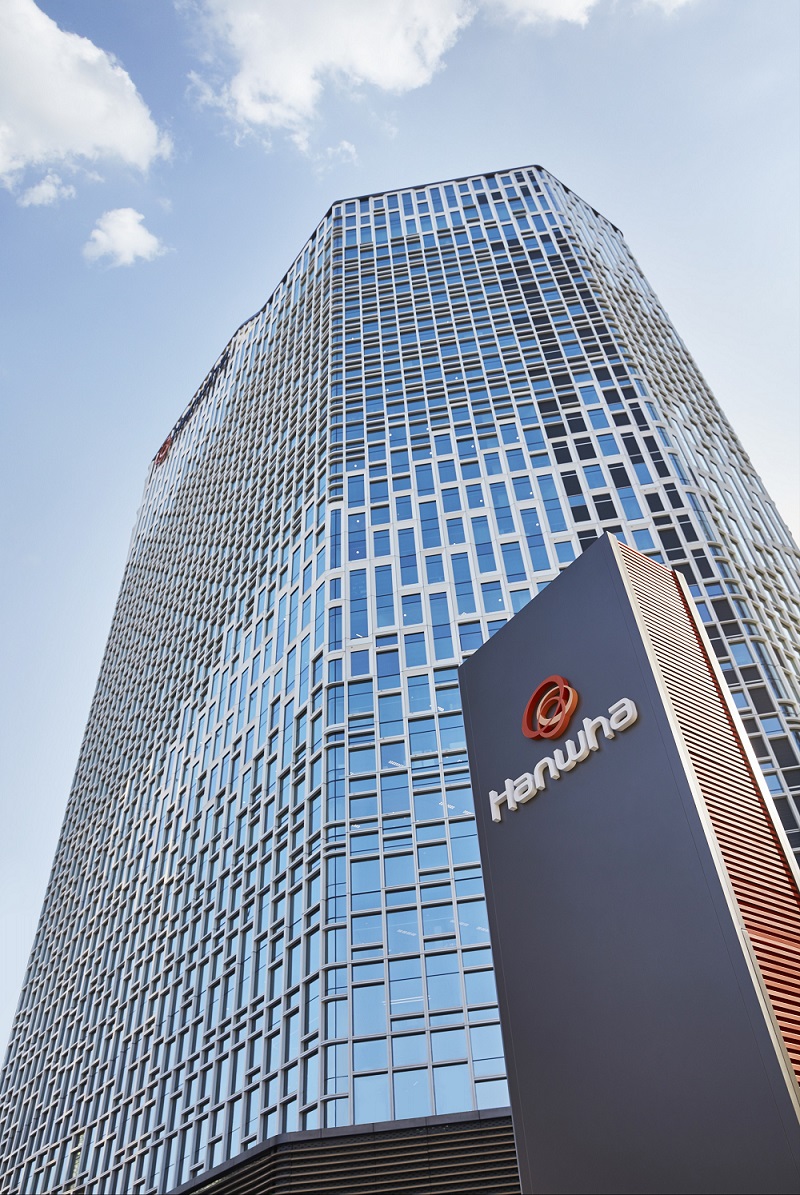
Hanwha Solutions will pursue capital expansion to strengthen its financial stability and secure future growth drivers through investment in next-generation solar technologies. Despite ongoing self-help measures, rising credit risks have necessitated a rights offering to improve its financial structure and secure funding for mid- to long-term growth.
The company announced on March 26 that its Board of Directors has approved a rights offering worth KRW 2.4 trillion. The proceeds will be used to repay accumulated borrowings incurred from facility investments aimed at strengthening mid- to long-term competitiveness, thereby improving the company’s financial structure and proactively mitigating the risk of a credit rating downgrade.
At the same time, Hanwha Solutions plans to transition its manufacturing toward high-efficiency, high-output renewable energy solutions while establishing a mid- to long-term growth roadmap in which stable business operations and growth investments translate into profit generation and shareholder returns. The company aims to achieve KRW 33 trillion in consolidated revenue and KRW 2.9 trillion in operating profit by 2030.
The rights offering will be conducted through a shareholder allocation method followed by a public offering of unsubscribed shares. The record date for share allocation is May 14, and the offering price will be finalized on June 17. Subscription for existing shareholders will take place over two days starting June 22, followed by a public subscription period for unsubscribed shares from June 25 to 26.
◆ Strengthening Financial Stability Following Self-Help Measures
Prior to the rights offering, Hanwha Solutions implemented large-scale self-help measures over the past two years, including asset disposals and issuance of hybrid securities, to improve its financial structure. The company divested assets worth approximately KRW 1.6 trillion, including idle land at the Yeosu industrial complex, residential land in Ulsan, renewable energy development assets, and equity stakes in affiliates. It also raised KRW 700 billion through hybrid securities (perpetual bonds) in the capital market.
Despite these efforts, a slowdown in the global solar and chemical industries has heightened concerns over its credit profile. Under these circumstances, capital expansion through a rights offering has become essential to proactively address potential financial burdens and impacts on corporate value stemming from a credit rating downgrade.
Of the funds raised, approximately KRW 1.5 trillion will be used to improve the financial structure and strengthen mid- to long-term financial stability. The company plans to repay corporate bonds, commercial paper, and credit line borrowings maturing this year, while managing its financial metrics to maintain a consolidated debt ratio below 150% and net borrowings at around KRW 9 trillion in 2026. Over the longer term, it aims to further enhance financial stability by reducing the consolidated debt ratio to 100% and net borrowings to KRW 7 trillion by 2030.
◆ Establishing Mass Production for Perovskite Tandem, a Solar Game Changer
The remaining KRW 900 billion will be allocated over the next three years to support future growth investments, as the company aims to become a global top-tier player in the solar market, expanding beyond Earth into space applications.
Hanwha Solutions will first invest KRW 100 billion in a pilot line for perovskite tandem solar cells, widely regarded as a game changer in the solar industry. This pilot facility will enable the company to validate reliability, process stability and manufacturability, while laying the groundwork for process optimization and mass production.
Building on the operational expertise gained from the pilot line, the company plans to invest KRW 800 billion to establish GW-scale tandem mass production capacity and expand TOPCon production capabilities, which can be used as the bottom cell in tandem structures.
TOPCon, a high-efficiency, high-output product, is a next-generation N-type solar cell technology that enhances cell efficiency and power output by advancing conventional PERC-based architectures. It is also gaining attention as a key bridge technology for the transition to tandem cells.
Recently, global solar manufacturers have been shifting away from capacity expansion competition toward high-efficiency, high-output products in pursuit of tandem commercialization. The technological capabilities accumulated through the stepwise transition from PERC to TOPCon and ultimately to tandem are expected to drive long-term expansion into future applications.
◆ New Five-Year Shareholder Return Policy Announced
Hanwha Solutions also announced a new shareholder return policy under which profits generated from stable operations and growth investments will directly translate into shareholder returns. For the next five years (2026–2030), the company will allocate 10% of consolidated net income to shareholder returns through dividends as well as share buybacks and cancellation. In addition, a minimum dividend of KRW 300 per common share will be guaranteed even if 10% of consolidated net income falls below that level.
Hanwha Solutions spokesperson said, “We will continue to invest in key growth areas, including renewable energy and high value-added materials, to strengthen our mid- to long-term competitiveness and earnings foundation. At the same time, we will maintain stable shareholder returns centered on our dividend policy, while enhancing financial soundness through expanded shareholder returns driven by business growth and disciplined debt reduction.”